Dispatch Date Update from XML
Automatically update the Despatch By Date on selected Linnworks orders from a custom XML dispatch date field, using a default date when the XML date is not available.
Overview
Dispatch Date Update from XML is an automated despatch-date management solution for Linnworks. It updates the Despatch By Date on selected orders using a custom dispatch date stored in the order XML.
The macro processes order IDs supplied through the Linnworks Rule Engine and checks whether each order belongs to the defined source. When a valid custom XML dispatch date is available, that date is applied to the Linnworks order.
If the custom XML dispatch date is missing or empty, the macro uses the configured DefualtDate value instead. Invalid XML date values are not applied and are recorded in the execution log.
Successfully updated orders are also assigned the Despatch By Date identifier, making them easier to identify within Linnworks.
Keep fulfilment planning consistent by automatically updating the Despatch By Date from order XML or a configured fallback date.
Who Should Use Dispatch Date Update from XML
Warehouse & Fulfilment Teams
Teams responsible for picking, packing, and dispatch can use the updated Despatch By Date to prioritise orders correctly.
Operations Managers
Operations managers can reduce manual date corrections and improve consistency across fulfilment workflows.
Integration Administrators
Administrators configure the fallback date, enable the macro, create the Rule Engine action, and monitor execution logs.
Dispatch Planning Teams
Planning teams can use XML-provided dates and fallback values to keep order priorities aligned with source data.
Key Features
XML Dispatch Date Extraction
Reads the custom dispatch date value from the order XML when the value is available.
Automatic Despatch Date Update
Updates the Linnworks Despatch By Date with a valid date extracted from the order XML.
Configurable Fallback Date
Uses the configured DefualtDate value when the custom XML dispatch date is missing or empty.
Defined Source Validation
Processes only orders belonging to the source defined within the macro logic.
Updated Order Identification
Assigns the Despatch By Date identifier to orders that were updated successfully.
Date Validation and Logging
Prevents invalid XML dates from being applied and records errors in the execution log.
How Dispatch Date Update from XML Works
Dispatch Date Update from XML follows a defined sequence whenever it receives one or more order IDs from the Linnworks Rule Engine.
Step 1: Order retrieval
The macro reads each order ID supplied through the OrderIds parameter and retrieves the corresponding order details and XML records.
Step 2: Source validation
The macro checks whether the order belongs to the defined source. Orders from other sources are skipped.
Step 3: XML dispatch date retrieval
The custom dispatch date value is read from the order XML when it is available.
Step 4: XML date validation
The macro validates the custom XML dispatch date before attempting to update the Linnworks order.
Step 5: XML date application
When the custom dispatch date is valid, the order Despatch By Date is updated using the XML value.
Step 6: Default date application
When the custom XML dispatch date is missing or empty, the configured DefualtDate value is used.
Step 7: Updated order collection
Orders updated successfully are collected so the Despatch By Date identifier can be assigned.
Step 8: Identifier assignment
The macro creates the Despatch By Date identifier when necessary and assigns it to the updated orders.
Configure the Macro
Once the app is installed, you need to create a macro configuration so the system knows which macro to run and what default despatch date should be applied when the XML date is missing.
This setup can be adjusted anytime based on your operational requirements.
Steps to Configure
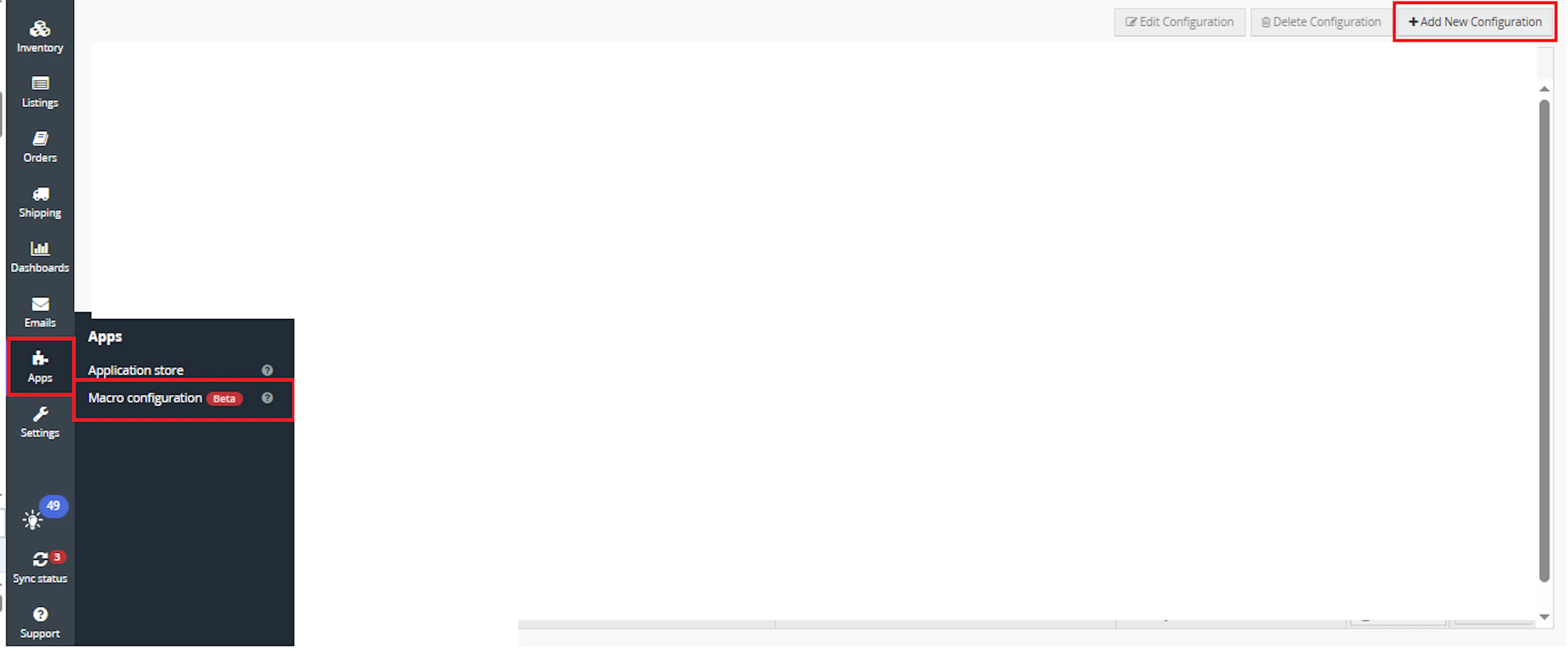
Go to Apps > Macro Configuration and click + Add new configuration.
Select the DispatchDateUpdatefromXML macro and click Create Configuration.
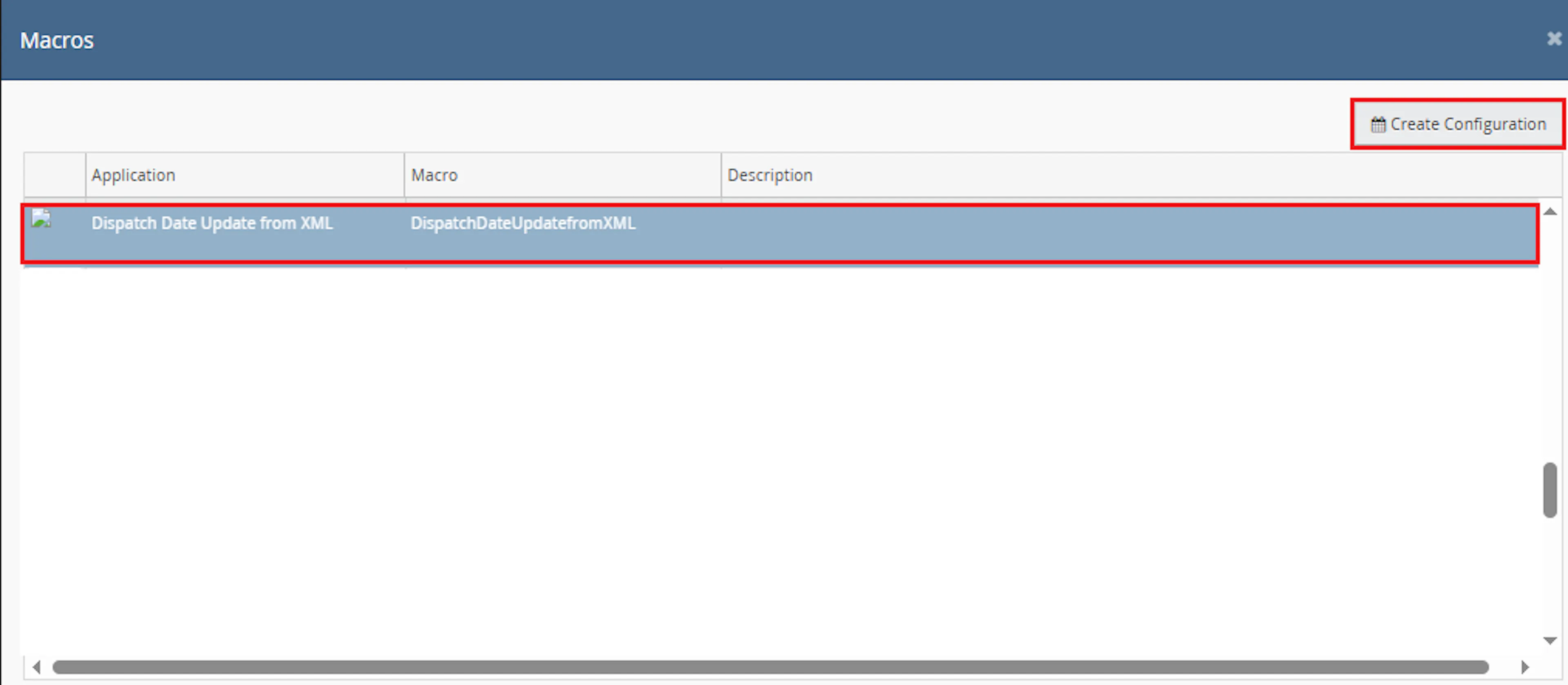
This creates a new configuration where you can define the required parameter value.
In the Macro Configuration screen, add the configuration name and parameter values.
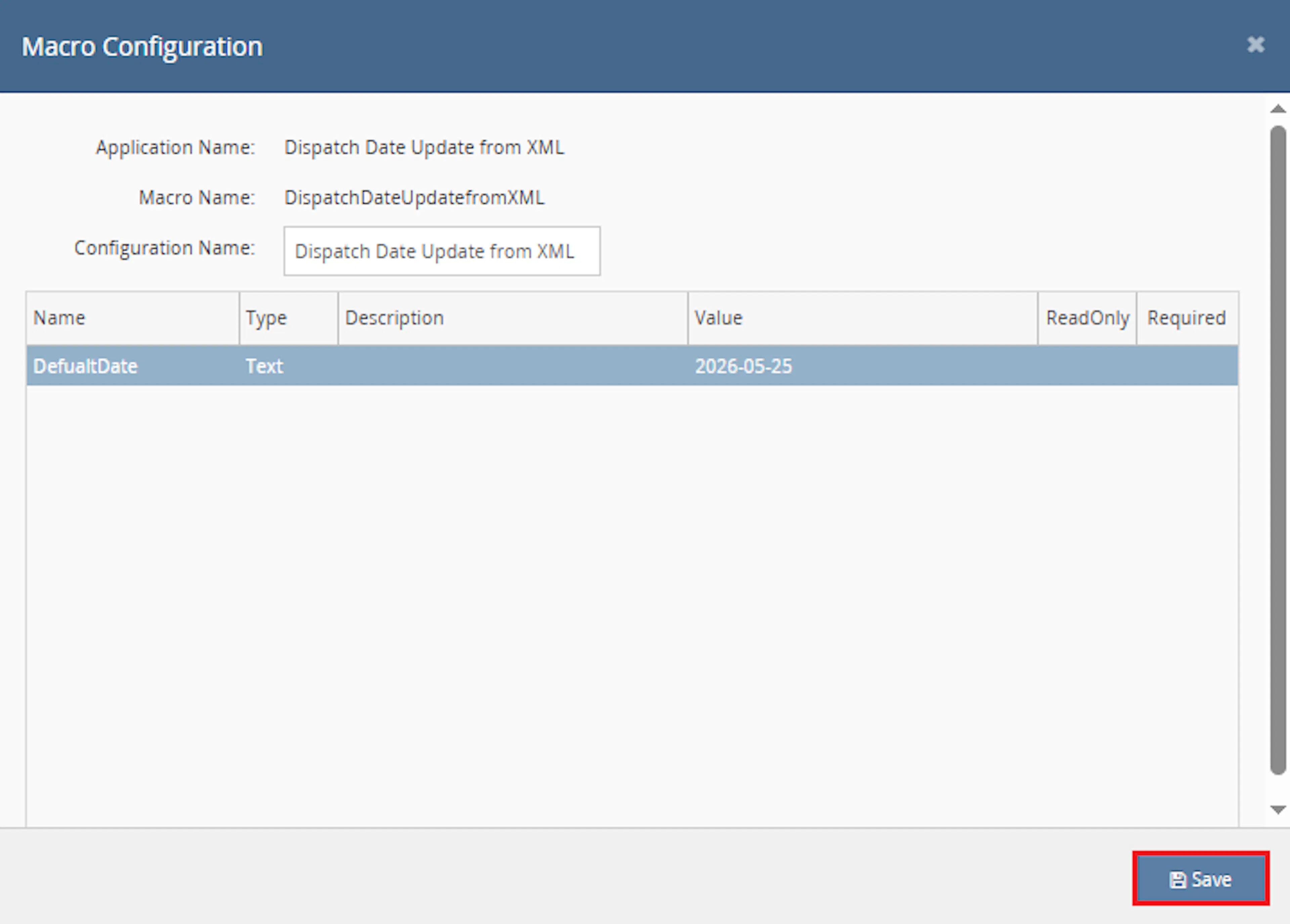
Configure the required parameter:
- DefualtDate — enter the fallback despatch date that should be used when the custom XML dispatch date is missing or empty.
Make sure to enable the macro to continue with the Rule Engine configuration.

Note: If the macro is not enabled, it will not appear in the Action value list when setting up the rule.
Go to Orders > Rules engine and click + Add new rule.
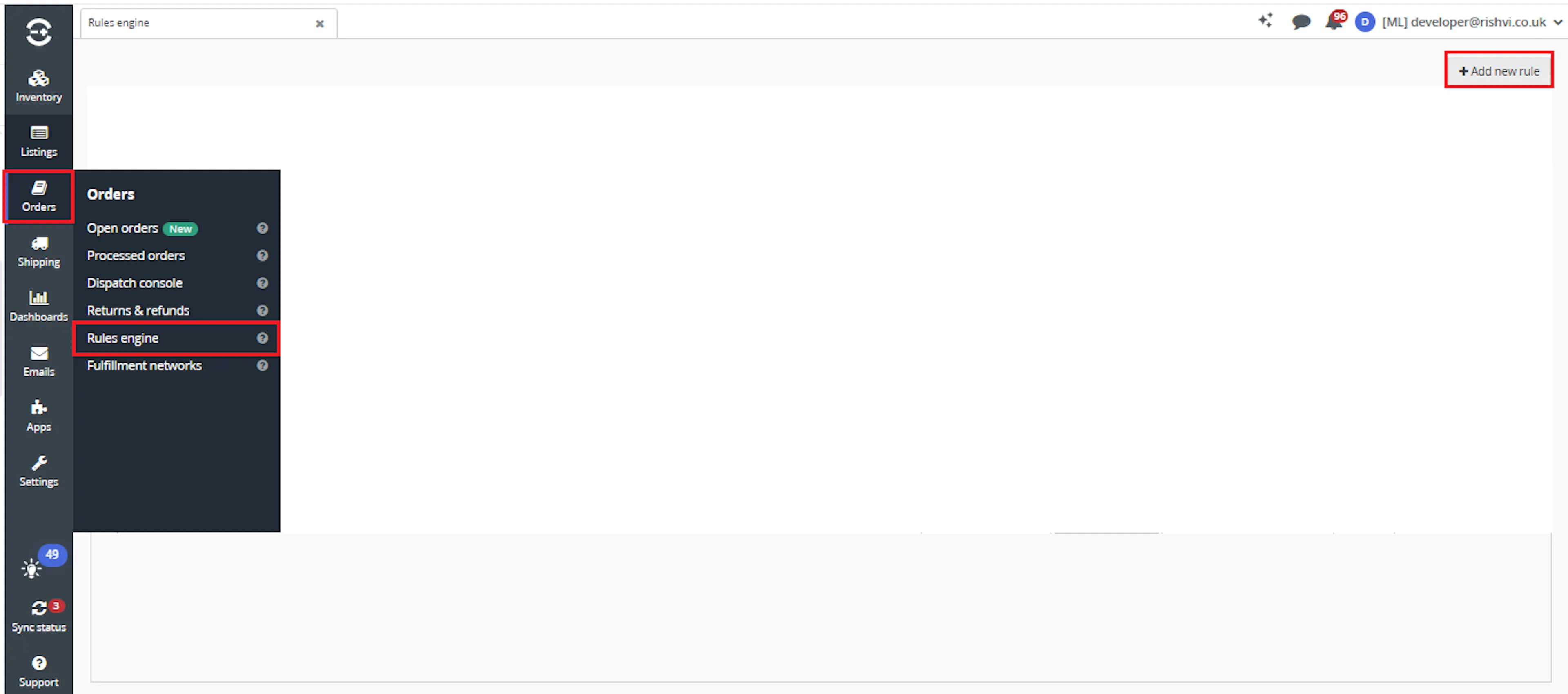
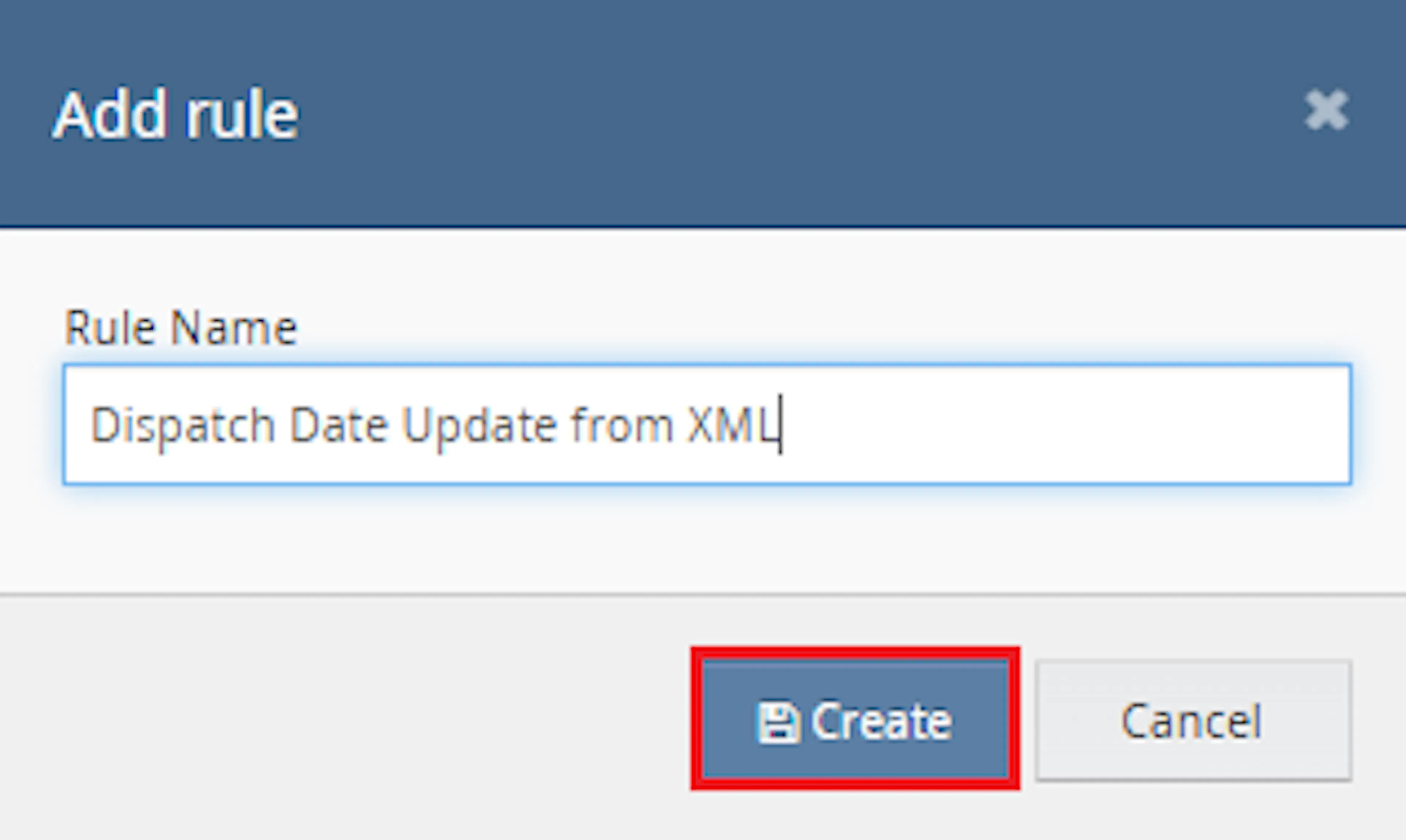
Enter the rule name and click Create.
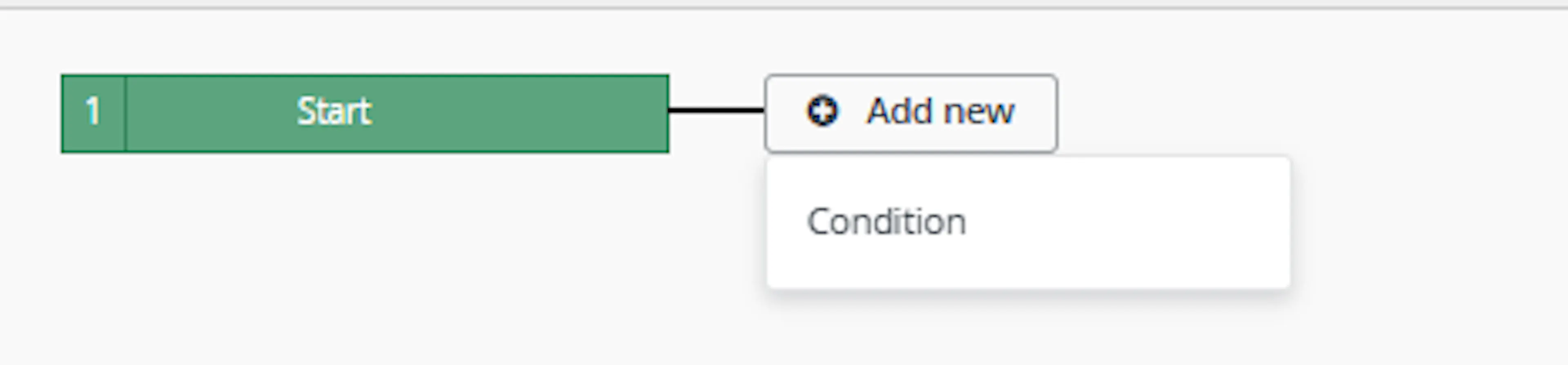
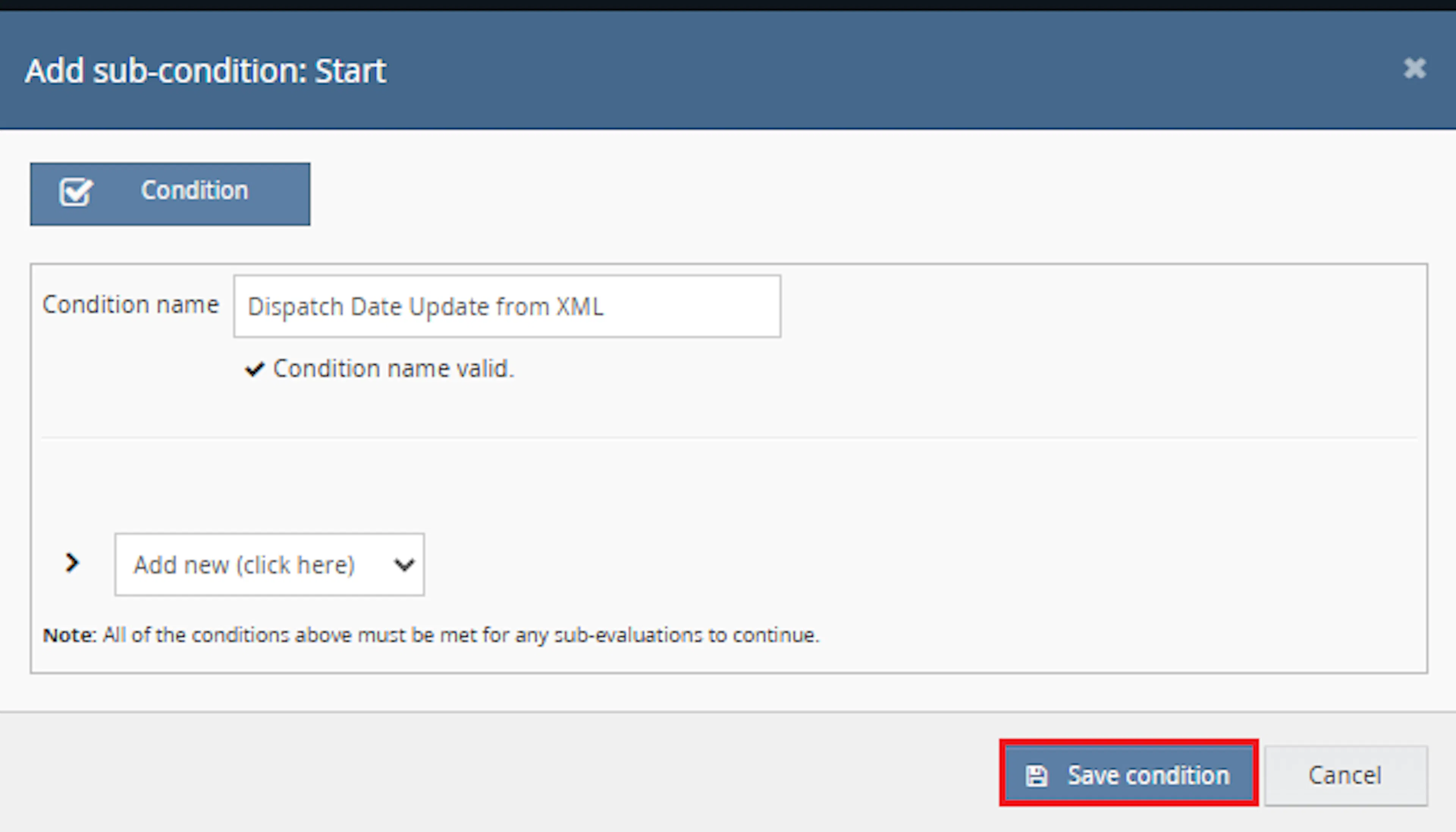
Click Add new, select Condition, set the condition as required, and save it.
Add the macro action and click Save.
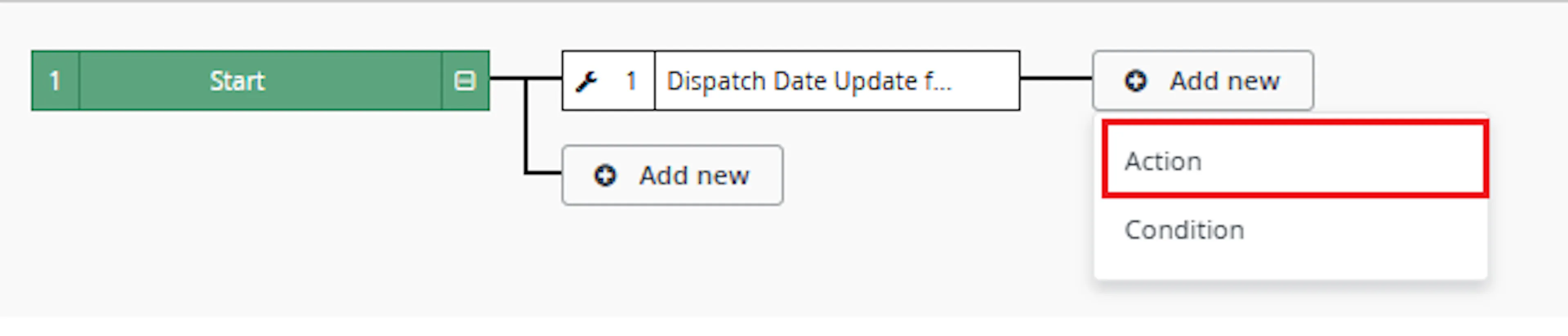
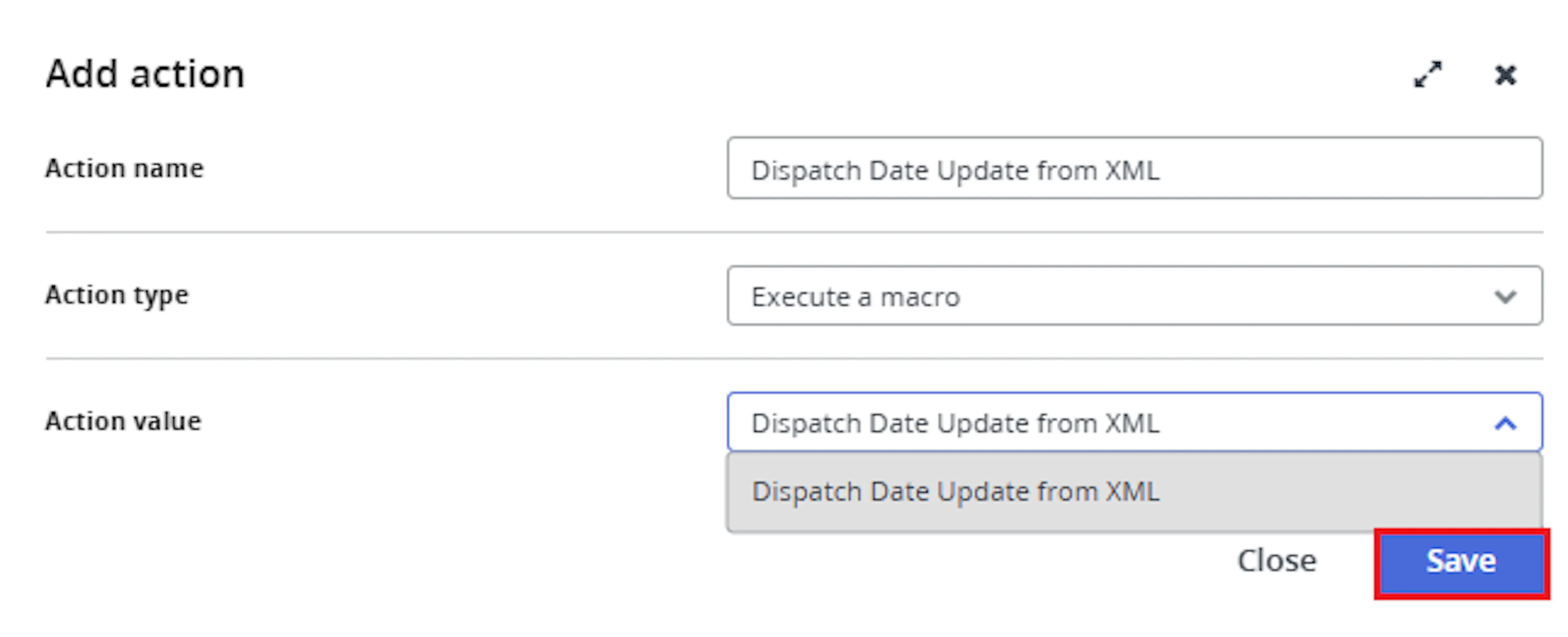
In the Add action window, enter the Action name, for example:
Dispatch Date Update from XML
-
Set Action type to:
Execute a macro -
In Action value, select:
Dispatch Date Update from XML
-
Click Save
Note: If the macro is not enabled, it will not appear in the Action value list when setting up the rule.
Review the saved rule setup.
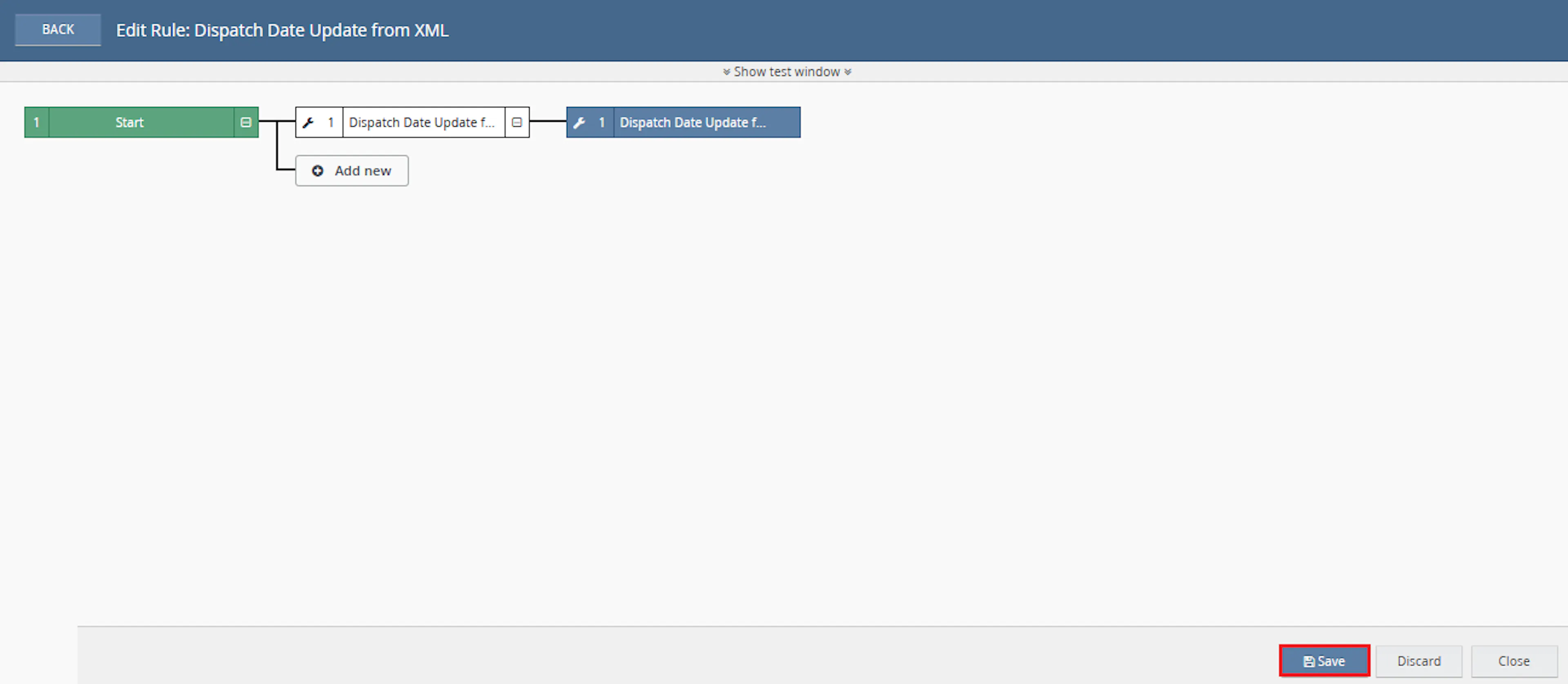
- Verify the condition and action are connected correctly
- Click Save in the bottom-right corner to save the rule
Key Benefits
Missing or incorrect despatch dates can affect fulfilment priorities and order planning. Dispatch Date Update from XML applies consistent date-selection logic to every selected qualifying order.
Reduce manual despatch-date updates, improve fulfilment planning, and clearly identify orders updated by the macro.
Reduce Manual Order Updates
Removes the need to open and update the Despatch By Date manually on each selected order.
Improve Dispatch Planning
Helps ensure qualifying orders receive a usable despatch date before fulfilment begins.
Use Source XML Data
Applies the custom dispatch date directly from the order XML when a valid value is available.
Apply a Fallback Date
Uses DefualtDate automatically when the XML dispatch date is missing or empty.
Avoid Invalid Date Updates
Invalid XML dates are not applied and are recorded as errors in the macro log.
Identify Updated Orders
Assigns the Despatch By Date identifier to orders updated successfully.
Usage of App
Dispatch Date Update from XML is triggered through the Linnworks Rule Engine to update the Despatch By Date on qualifying orders automatically.
Execution
Trigger via Rule Engine
Call the Dispatch Date Update from XML macro through the Rule Engine with the required OrderIds and configured DefualtDate. The macro processes only orders belonging to the defined source.
Outcome
When the macro runs against an order, it:
Validates the order source
Checks whether the selected order belongs to the source supported by the macro.
Reads the XML dispatch date
Retrieves the custom dispatch date value from the order XML when present.
Validates the XML value
Confirms that the XML dispatch date can be interpreted as a valid date.
Updates from XML
Applies the valid custom XML date to the order Despatch By Date.
Applies the fallback value
Uses the configured DefualtDate when the XML dispatch date is missing or empty.
Marks updated orders
Assigns the Despatch By Date identifier to orders updated successfully.
Records execution results
Logs macro start, invalid dates, API errors, and completion.
Input Parameters
Dispatch Date Update from XML requires the following inputs:
| Parameter | Required | Description |
|---|---|---|
| OrderIds | Yes | The Linnworks order IDs to process. Supplied through the Rule Engine action. |
| DefualtDate | Yes | The fallback Despatch By Date used when the custom XML dispatch date is missing or empty. |
Important: The parameter name is spelled DefualtDate in the macro configuration and must be used exactly as shown.
The following behaviour is built into the macro:
| Setting | Description |
|---|---|
| Defined Source | Only orders belonging to the source defined in the macro logic are processed. |
| Custom XML Dispatch Date | Preferred value used for the Despatch By Date when it is present and valid. |
| Fallback Date | DefualtDate is used only when the XML date is missing or empty. |
| Invalid Date Handling | Invalid XML dates are not applied and are recorded in the execution log. |
| Updated Order Identifier | Successfully updated orders receive the Despatch By Date identifier. |
Date Update Rules
The macro applies the following date-selection rules:
| Order or XML Condition | Macro Behaviour |
|---|---|
| Order belongs to the defined source and XML date is valid | Updates Despatch By Date using the XML value. |
| Order belongs to the defined source and XML date is missing | Updates Despatch By Date using DefualtDate. |
| Order belongs to the defined source and XML date is empty | Updates Despatch By Date using DefualtDate. |
| XML date is invalid | Does not apply the invalid date and logs an error. |
| Order belongs to another source | Skips the order. |
| Order is updated successfully | Assigns the Despatch By Date identifier. |
Example Scenario
Assume the macro is configured with:
Configured DefualtDate
2026-05-25
The selected orders produce the following outcomes:
| Order | Condition | Result |
|---|---|---|
| Order A | Defined source with a valid XML dispatch date | Despatch By Date is updated from XML. |
| Order B | Defined source with an empty XML dispatch date | Despatch By Date is updated using DefualtDate. |
| Order C | Defined source with an invalid XML dispatch date | No XML date is applied and an error is logged. |
| Order D | Order is not from the defined source | The order is skipped. |
Orders A and B are assigned the Despatch By Date identifier after successful updates.
Best Practices
Configure a valid fallback date and test the macro with representative XML records before enabling it across a large order volume.
Use a valid fallback date
Enter DefualtDate in a format that can be parsed successfully by the macro and Linnworks.
Use targeted rule conditions
Configure the Rule Engine to select only orders expected to belong to the defined source.
Validate sample XML
Confirm that sample orders contain the expected custom dispatch date value before enabling the macro widely.
Run before fulfilment planning
Trigger the macro before orders are prioritised for picking, packing, or dispatch.
Review updated identifiers
Confirm that successfully updated orders receive the Despatch By Date identifier.
Monitor execution logs
Review logs for invalid date values, skipped sources, API errors, and successful completion.
FAQ
How is Dispatch Date Update from XML triggered?
The macro is triggered through the Linnworks Rule Engine. Matching order IDs are supplied automatically through the OrderIds parameter.
What configuration value is required?
The macro requires the DefualtDate parameter.
Why is the parameter spelled DefualtDate?
That is the parameter name defined by the macro and shown in the Macro Configuration screen. It must be used exactly as provided.
Which date is preferred?
The valid custom dispatch date from the order XML is preferred.
When is DefualtDate used?
DefualtDate is used when the custom XML dispatch date is missing or empty.
What happens when the XML date is invalid?
The invalid value is not applied, and the error is recorded in the macro log.
Does the macro update orders from every source?
No. Only orders belonging to the source defined within the macro logic are processed.
What happens to orders from another source?
They are skipped.
Which Linnworks field is updated?
The macro updates the order Despatch By Date.
How are successfully updated orders identified?
They receive the Despatch By Date identifier.
What happens if the identifier does not already exist?
The macro creates the identifier before assigning it to updated orders.
Does the macro process every Linnworks order automatically?
No. It processes only the order IDs supplied through the configured Rule Engine action.
Can the macro update multiple orders in one execution?
Yes. It loops through all order IDs passed through OrderIds.
What should be checked when an order is not updated?
Confirm that the order belongs to the defined source, the rule supplied the order ID, and either a valid XML date or valid DefualtDate is available.
What should be checked when no identifier is assigned?
Confirm that the order Despatch By Date was updated successfully and review the macro log for errors.
Legal Information
- Privacy Policy: https://rishvi.co.uk/privacy-policy/
- Terms and Conditions: https://rishvi.co.uk/terms-conditions/
Please review these pages to understand how data is handled and the terms governing the use of this application.
Summary
Dispatch Date Update from XML automates the management of the Linnworks Despatch By Date for selected orders.
Once connected to the Rule Engine, the macro validates the order source, reads the custom XML dispatch date, applies a valid XML value where possible, uses DefualtDate when the XML value is missing, and assigns an identifier to successfully updated orders.
Automatic XML date updates
Valid custom XML dispatch dates are applied directly to the Linnworks Despatch By Date.
Fallback date handling
DefualtDate is applied when the XML dispatch date is missing or empty.
Controlled source processing
Orders are updated only when they belong to the source defined by the macro.
Updated order identification
Successfully updated orders receive the Despatch By Date identifier.
For orders that do not update as expected, review the Rule Engine and macro logs, confirm that the order belongs to the defined source, and verify that the XML date or configured DefualtDate is valid.